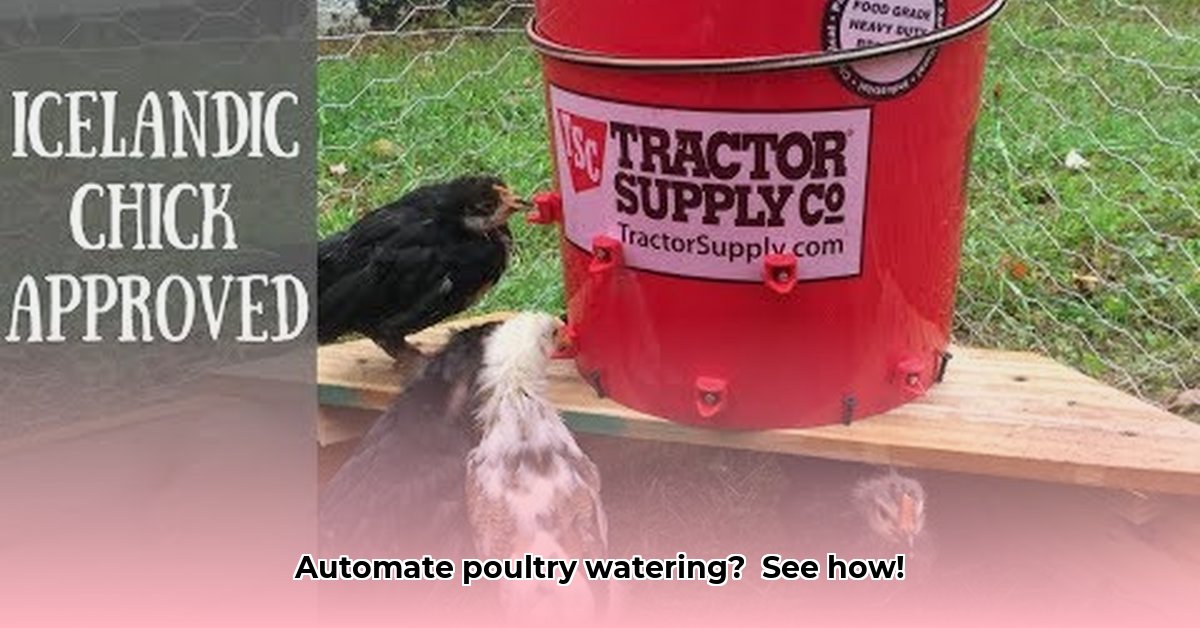
Keeping your chickens hydrated shouldn't be a daily chore. Automating your poultry watering system boosts efficiency, saves time, and improves bird welfare. This article explores the market for automated poultry waterers, focusing on Tractor Supply's offerings while providing a broader perspective to help you choose the best system for your needs. For more information on pond aerators often used with these systems, see this helpful resource.
The Modern Poultry Farmer's Challenges: Time, Cost, and Happy Hens
Modern poultry farming demands efficiency. Manual watering is time-consuming, especially with larger flocks. Fluctuating weather conditions further complicate matters; extreme heat or freezing temperatures can impact water intake and bird health. Beyond efficiency, animal welfare is paramount; consistent access to clean water is crucial for happy, healthy birds. Automated watering systems directly address these challenges.
Navigating the World of Automated Watering Systems
Several automated systems exist, each with trade-offs. Gravity-fed systems are generally inexpensive and easy to maintain, ideal for smaller flocks. However, they lack the precision and reach of pump-based systems, better suited for larger operations. In colder climates, heated systems are essential to prevent freezing. Unfortunately, comprehensive market data is limited, making informed decisions challenging.
Tractor Supply Automatic Waterers: A Practical Consideration
Tractor Supply offers various automated poultry watering systems catering to different flock sizes and budgets. They are known for user-friendly designs and relatively easy maintenance. While a good starting point, it’s crucial to compare Tractor Supply's offerings with competitors to find the best solution for your farm's specific needs and budget. Pricing and features vary significantly across models and brands.
Evaluating Tractor Supply's Automatic Waterers:
| Feature | Pros | Cons |
|---|---|---|
| Ease of Use | User-friendly design; straightforward installation and operation | May lack advanced features found in higher-priced competitor systems |
| Durability | Generally robust; many come with warranties | Lifespan depends on use, maintenance, and environmental factors |
| Price | Competitive pricing; various options for different budgets | Premium models can be expensive |
| Maintenance | Relatively low; primarily regular cleaning | Requires periodic cleaning and occasional part replacements |
| Availability | Widely available at Tractor Supply stores; easy parts access | Specific models or parts might be temporarily unavailable |
Actionable Steps for Selecting and Maintaining Your System
Successfully implementing an automated system requires careful planning and maintenance. Follow these steps for optimal results:
- Needs Assessment: Evaluate your flock size, climate, and budget. Consider future growth.
- System Selection: Choose a system matching your needs. Gravity or pump? Heated or unheated? Don't underestimate the importance of this step.
- Installation: Follow manufacturer instructions precisely. Proper installation is crucial for system longevity and performance.
- Regular Maintenance: Inspect the system regularly for leaks, clogs, or malfunctions. Cleaning prevents bacterial growth.
- Troubleshooting: Familiarize yourself with common issues and solutions. Proactive problem-solving avoids significant setbacks.
Sustainability: Minimizing Environmental Impact
While convenient, automated systems have environmental considerations. Heated systems consume energy, and leaks waste water. To minimize your impact:
- Choose energy-efficient models.
- Explore solar-powered alternatives whenever feasible.
- Avoid oversizing the system to prevent unnecessary water usage.
- Plan for responsible disposal at the end of the system's lifespan.
Risk Assessment and Mitigation: Preventing Potential Problems
| Risk Factor | Likelihood | Severity | Mitigation |
|---|---|---|---|
| System malfunction | Low | Medium | Regular inspections; prompt replacement of faulty parts |
| Clogged Water Lines | Medium | Low | Regular flushing and using filtered water |
| Power Outages (Heated Systems) | Low | High | Backup power source (e.g., generator); system monitoring |
| Water Leaks | Low | Medium | Regular inspections; quick identification and repair of leaks |
Regulatory Compliance: Staying on the Right Side of the Law
Before installation, confirm that your chosen system complies with all local, state, and federal regulations regarding food safety and electrical standards. Material compliance is also essential; check for regulations surrounding materials such as BPA in water contact components.
Conclusion: Elevating Your Poultry Operation
Automated poultry watering systems offer significant advantages, streamlining operations and enhancing bird well-being. While Tractor Supply provides readily accessible options, thorough research and careful consideration of your specific needs are crucial for choosing the right system. Responsible implementation and sustainable practices ensure long-term efficiency and environmental stewardship.